


08/10/2026
Which mirror for a bathroom with two sinks?
Two sinks are convenient, but how to choose a mirror for them? Check how to combine dimensions, geometry and lighting to maintain perfect interior proportions.

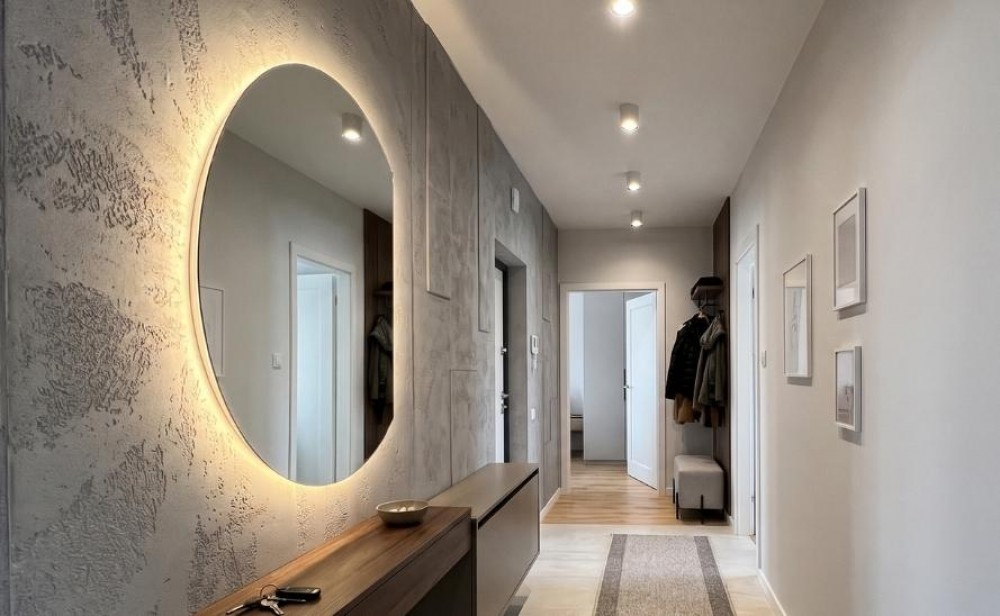
A narrow hallway is a design challenge faced by many owners of apartments in blocks and modern condominiums. A long, awkward corridor without a window can feel claustrophobic, and yet this is the very zone that greets household members and guests as soon as they cross the threshold. How can you change this without knocking down walls? The answer is a well-chosen hallway mirror. A well-planned pane can completely transform the proportions of the interior, brighten the gloom, and create an illusion of depth. If you’re wondering which mirror for a narrow hallway will work best, the guide below will walk you step by step through the nuances of selecting dimensions, shapes, frames, and installation techniques.
The choice of orientation determines how the human eye will perceive the corridor as a whole. Both a vertical mirror and a horizontal mirror serve completely different visual goals, so it’s crucial to diagnose the shortcomings of your home.
When the ceiling is low and the corridor feels like a tight cage, the ideal choice is a vertical mirror. This solution visually raises the room and lifts the ceiling by directing the gaze upward. Additionally, the vertical variant is extremely practical because it lets you easily check your entire silhouette before leaving home - from the top of your head to your shoes. To achieve this effect, the height of the pane should be at least 90–140 cm (for a person 180 cm tall, a pane at least 90 cm high is an absolute baseline for comfortable viewing).
By contrast, a horizontal mirror is an indispensable ally where the priority is to reduce the impression of „tunnel”. Placed on the longer wall, it visually widens the corridor, making the narrow walls seem to move apart. This variant looks great hung above a piece of furniture - for example, above a low shoe cabinet or an elegant dresser.
In corridors with very limited square footage, the width of the glass itself is also key. From an ergonomic and optical point of view, hallway mirror should be at least 35 cm wide so it doesn’t resemble a thin slat. An excellent, field‑tested format in many projects is a rectangular mirror measuring 35×112 cm, and the optimal dimensions for a mirror in a narrow hallway are considered to be 45×126 cm. This proportion allows a comfortable view of the silhouette while not taking up valuable wall space.
The geometric form of the mirror directly affects the corridor’s dynamics. When considering which mirror shape to choose, it’s worth taking the dominant lines in the interior into account.
Rectangular mirror is the most universal solution, bringing harmony, order, and symmetry to the arrangement. Rectangular mirrors visually enlarge the space thanks to perpendicular lines that align with the verticals of walls and door frames. Interestingly, in tall apartments, large mirrors in this format give the corridor a monumental, orderly rhythm. If you want a spectacular effect, the pane should occupy at least 2/3 of the wall height – such proportions integrate brilliantly with the architecture of small interiors.
By contrast, a round mirror breaks the pattern of sharp edges. In a narrow corridor, where the accumulation of doors, closets, and right-angled corners can be overwhelming, round forms introduce the desired lightness, softness, and a modern touch. Although a round pane is less often used to assess footwear, it works perfectly hung at eye level, creating an intriguing focal point. In boho or Scandinavian interiors, circular panes are almost an obligatory decorative accent.
A frame is not only a mounting element but also an important aesthetic statement. In a small hallway, an ill-chosen setting can have the opposite effect to what you intended - instead of breathing room, it introduces visual chaos and overwhelm.
The basic rule is that a thin frame or no frame keeps the mirror from overwhelming the space. In small interiors, frameless models with polished edges work brilliantly. The lack of a frame emphasizes the minimalist character of the interior, giving the impression that the pane blends into the background and opens an additional passage within it. An alternative is mirrors recessed into the wall - placed in line with tiles or a niche, they don’t take up space in the passage, which in a tight circulation zone eliminates the risk of bumping the frame with an elbow or bag.
If you opt for a frame, remember about consistency:
Frame width: To keep it light yet define the contour, the frame profile should be at least 2–4 cm wide. A too-thick, several‑centimeter molding will dominate a small hallway.
Scandinavian style: A natural, light wooden frame brings coziness and warmth.
Modern interiors and industrial style: A slim metal frame or a black setting will give the corridor a loft‑like, strong character. A mirror in a black frame contrasts fantastically with white or gray.
Glamour and art deco style: A noble, gold frame adds sparkle, beautifully reflecting light points and creating an exclusive atmosphere.
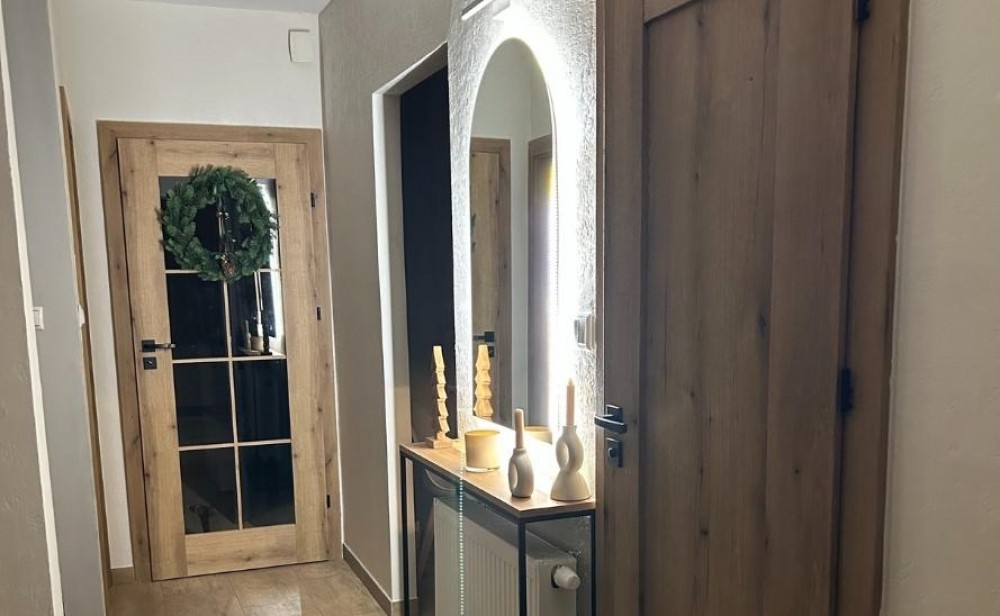
In a dark hallway without windows, a mirror acts as an additional reflector. Correct placement of the mirror is crucial to achieving a favorable optical effect.
Rule number one: the mirror should reflect light and bright decor elements to multiply brightness in the corridor. If possible, hang the mirror in the hallway opposite a light wall or where it catches rays coming from an adjacent, well‑lit living room. The reflection of a bright plane instantly brightens a dark corridor.
Technical installation rules are also important:
Mounting height: The hanging height must be adjusted to the eye level of the household members.
Golden standard: The center of the mirror should be at a height of 150–160 cm from the floor level. This location is natural for the human eye and guarantees that none of the residents will have to bend down or stand on tiptoes to check their appearance.
What about artificial lighting? In modern interiors, a LED mirror is a fantastic choice. LED strips integrated behind the pane create a soft glow around the edges that lifts the glass off the wall and enhances the sense of depth. Additionally, a mirror with LED lighting provides even illumination of the face without creating shadows under the eyes, which makes last‑minute makeup or hair touch‑ups before leaving much easier.
When every square centimeter of floor and wall counts, it’s worth choosing multifunctional solutions. Sometimes a classic, separate wall‑hung mirror has to give way to built‑in elements.
A particularly clever move is a mirror on the door of a built‑in wardrobe, which perfectly combines the functions of a mirror and storage. Large panes mounted on sliding or hinged doors reaching from the very floor to the very ceiling can completely dematerialize the mass of a deep wardrobe. The piece stops visually dominating the corridor, and the room gains double depth.
Another functional option is hybrid models: panes combined with narrow shelves for keys, a built‑in organizer, or hidden hooks for outerwear. By choosing this type of construction, you gain order and aesthetics in a single furnishing element, creating a harmonious, consistent arrangement as a whole.
Even the most beautiful pane won’t fulfill its role if you make basic design mistakes:
Reflecting chaos: Placing a mirror opposite an open rack with lots of outerwear will create double the clutter in the room. The pane should show an aesthetic, orderly frame.
Mirror too small: Hanging a miniature mirror on a long, empty wall disrupts proportions and looks accidental. A narrow corridor loves decisive formats – large panes work much better in it than small decorations.
Wrong light angle: Directing a strong light source straight at the pane will create blinding glare that will strain the eyes every time you pass through the corridor.
A well‑thought‑out arrangement of a narrow hallway doesn’t have to mean painful compromises. Using the right dimensions, mounting at the proper height, and skillful play with reflected light will let you conjure up a spacious, bright, and inviting interior. Choose a solution that matches your home’s style and see how spectacular a transformation your hallway can undergo!
08/10/2026
Two sinks are convenient, but how to choose a mirror for them? Check how to combine dimensions, geometry and lighting to maintain perfect interior proportions.